

This is part 9 of the Marketing Strategy blog series (you can read all of them here) where we’re going to be talking all about sales funnels and ROI (aka return on investment). Your aspects of marketing can be fantastic but unless they are working in unison, funneling your potentials from discovery to conversion then they won’t be working for you.
You need to be directing your audience, all of your leads and potentials, through a journey that ends with a sale.
If you’ve scoured my blog or socials, you’ll know that I refer to social media as the middle man. It’s not where we want our potential clients to end up – it’s often where we meet them, hopefully where we grab their attention, and ideally bring them into our world full of value. But what then? How do we actually make a living?
Sales Funnels
Simply put, a sales funnel encapsulates your customer’s journey from first impression to committed client. It’s a roadmap of how we as a business will funnel our potentials through the stages to becoming a paying client.
This is done through different aspects of marketing and showing potential clients the value in your work. For example:
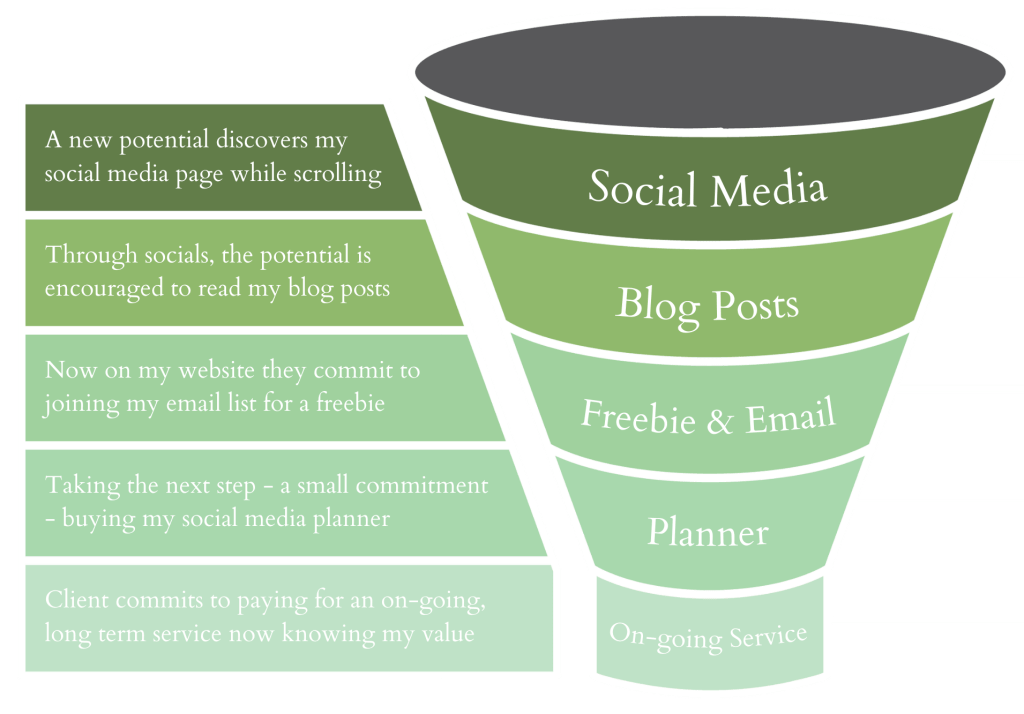
There are 6 steps to a successful sales funnel: AWARENESS, INTEREST, DECISION, INTENT, EVALUATION AND ACTION, LOYALTY AND RETENTION. Each stage requires thoughtful strategies that nurture your audience and convert leads.
ROI
Return on investment is a huge aspect of Little Crow’s simple and sustainable strategy. In order to ensure that your business marketing is working for you, not against you (and therefore freeing up a lot of your time) we need to assess what strategies are actually leading to income.
You’ll need to track where your income coming from alongside what your outgoing costs are, such as paid advertisements. There is no point in spending lots of time and money on strategies that aren’t bringing in clients and profit.
And easy way to calculate ROI is: ROI = (Net Profit / Investment) x 100. Your answer then shows as a percentage.
But it goes beyond actual profit – also take into account other forms of progress such as data analysis of your platforms, how your leads find you, what gets people’s foot in the door of commitment. Be sure to monitor all metrics available to you, but also do market research. When you gain a new lead, ask them how they found you and what helped them to decide to commit. Keep track of what is working well and what could be dropped to conserve time, money and energy while still optimising your business.
What’s included in your main sales funnel?
 LITTLE CROW MARKETING
Leave a comment